Billion Plus Website
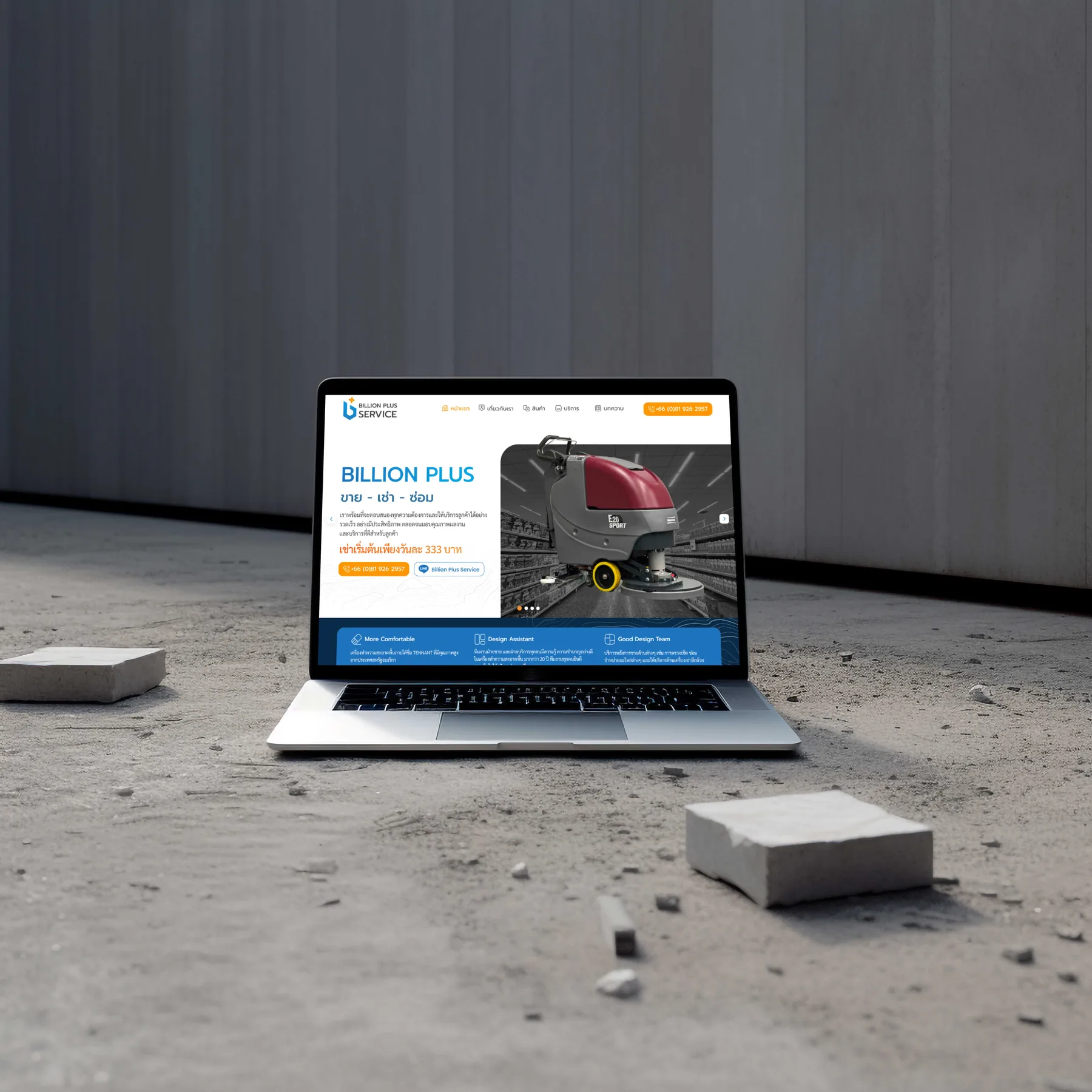
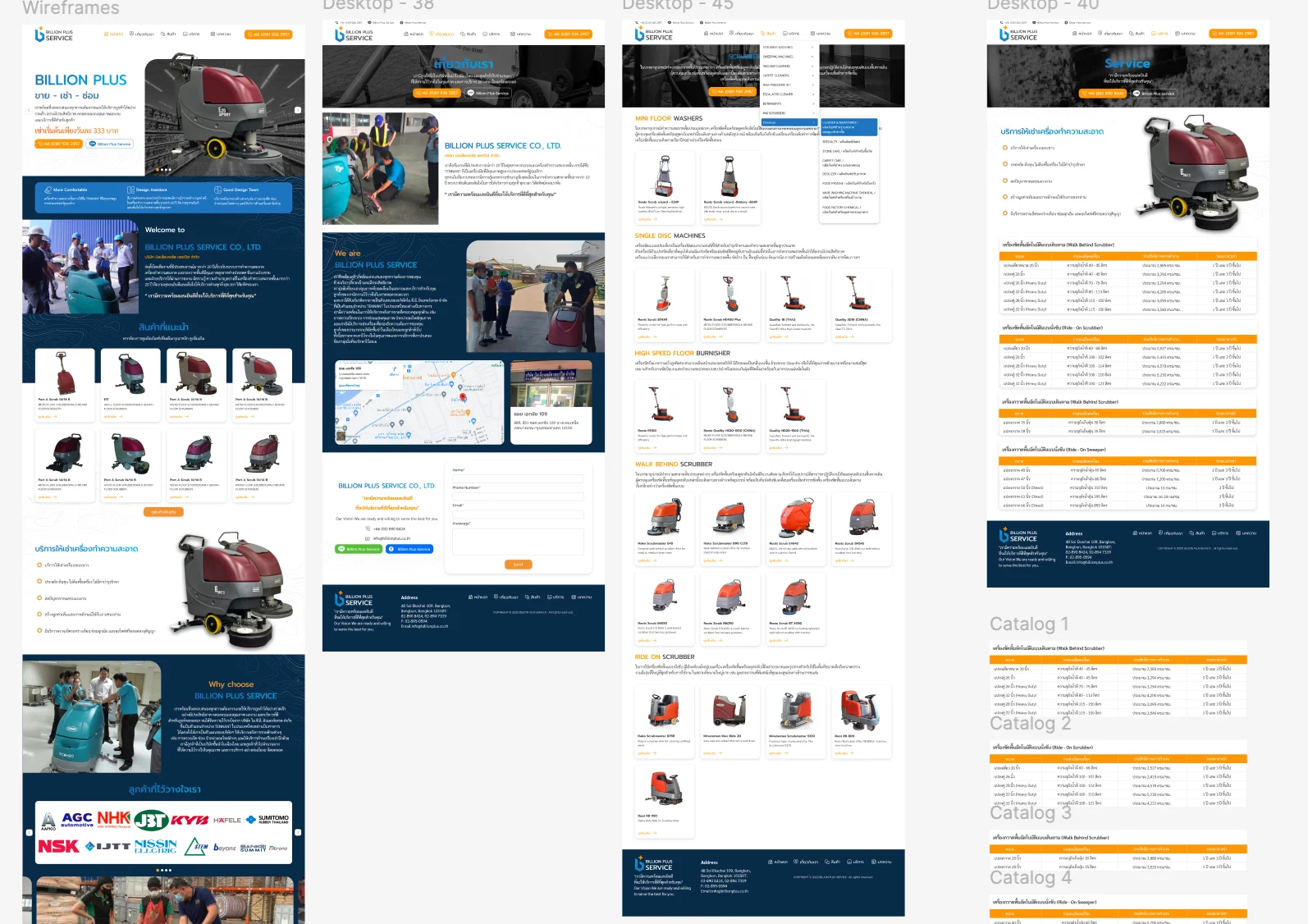
A catalogue site for an industrial floor-cleaning equipment supplier that sells, rents and repairs. It is designed for a facilities manager who knows their floor and their shift rather than the product range, so the catalogue is organised by task and the specification tables answer the sizing question directly.
Problem & Usability Gaps
A floor-cleaning machine is usually bought by a facilities or plant manager rather than an equipment specialist. Read against the heuristics, a catalogue organised by model name asks them to learn the supplier's vocabulary before choosing; the specification that decides a purchase, how much floor a machine clears per hour, needs to sit against the sizes on offer; and the rental option, often the better answer for a one-off clean, is easy to miss on a page shaped for sales.
Design Decisions by Heuristic
Before & After by Heuristic
| Heuristic | Before | After | Change |
|---|---|---|---|
| Real-world | Model number as the entry point | Machine class and cleaning task | Restructured |
| Recognition | Ask a salesperson to size | Throughput set against size in a table | Self-serve |
| Prevention | Rental behind an enquiry | Rental entry price in the hero | Surfaced |
| Consistency | A long list of models | One card per machine, grouped by class | Uniform |
"A plant manager does not want a machine; they want the floor clean before the next shift. Publishing throughput against size turns the catalogue into a calculation they can run themselves."
— Design rationale · Billion Plus WebsiteDesign Learnings
Buyers navigate by the constraint they own, floor area and shift length, not by the supplier's product codes, so the deciding specification belongs in the table.
Stating every route in the hero is cheap error prevention: three words stop a rental customer leaving a page shaped for sales.
A class heading with a short explanation helps a non-specialist more than a filter does, because it tells them which group their job belongs to before they look at a single model.