Pumacha Website

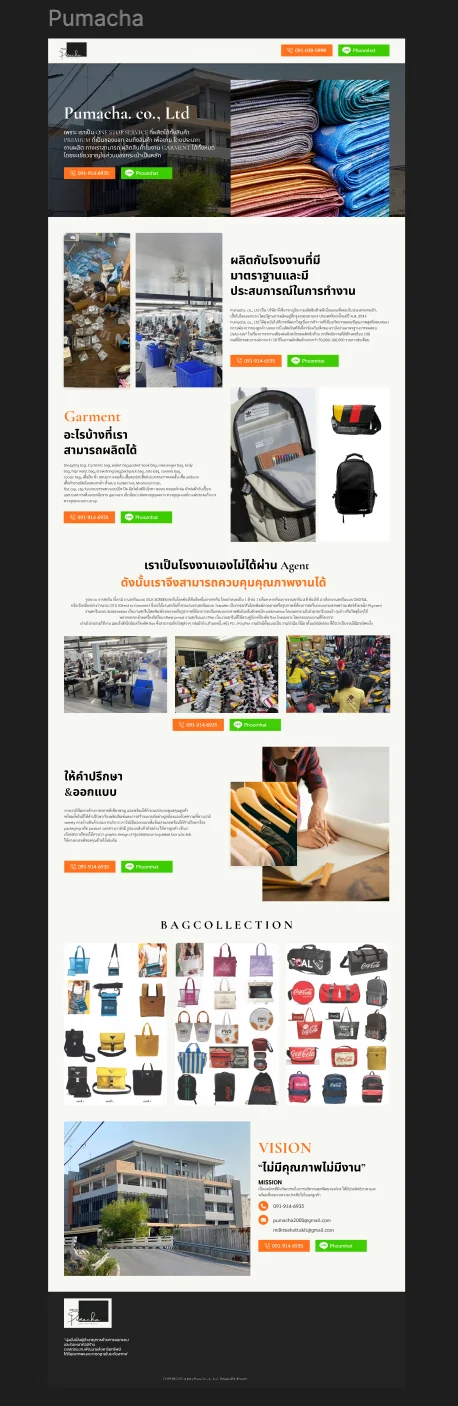
A single-page site for a garment and bag factory selling promotional goods to corporate buyers. The page is built around one claim, that buyers deal with the factory directly, and the design places beside it evidence a buyer can check, a named list of what can be made, and contact wherever they stop reading.
Problem & Usability Gaps
Corporate buyers of promotional goods often reach factories through agents, and from a website an agent and a manufacturer look the same: both show finished products. Read against the heuristics, a claim to be the factory needs real-world evidence a buyer can check; capability described in general terms makes a buyer with a specific brief ask rather than look; and on a single long page, contact placed only at the end misses the moment they decide.
Design Decisions by Heuristic
Before & After by Heuristic
| Heuristic | Before | After | Change |
|---|---|---|---|
| Real-world | Claimed only | Own factory floor photographed | Shown |
| Recognition | Capability unstated | Twelve bag types named | Listed |
| Guidance | Artwork assumed | Consultation and design offered | Explained |
| Efficiency | Footer only | Seven call and LINE points | Multiplied |
"From a website, a trading agent and a real factory look the same. The one thing an agent cannot show is their own sewing floor, so that is what sits beside the claim."
— Design rationale · Pumacha WebsiteDesign Learnings
When a page leads with a claim, the design job is to place beside it the one piece of evidence a competitor could not fake.
Naming capability item by item lets the wrong buyer recognise early that it is not for them, which saves both sides an enquiry.
On a single-page site the exit has to be everywhere, because the reader stops wherever they decide.