Lead UX/UI DesignerResponsive Corporate WebsitePlastic Injection Moulding / OEM

Thaimanee Craft Website
BEURDEV CO., LTD. · Feb 2024 – Apr 2024
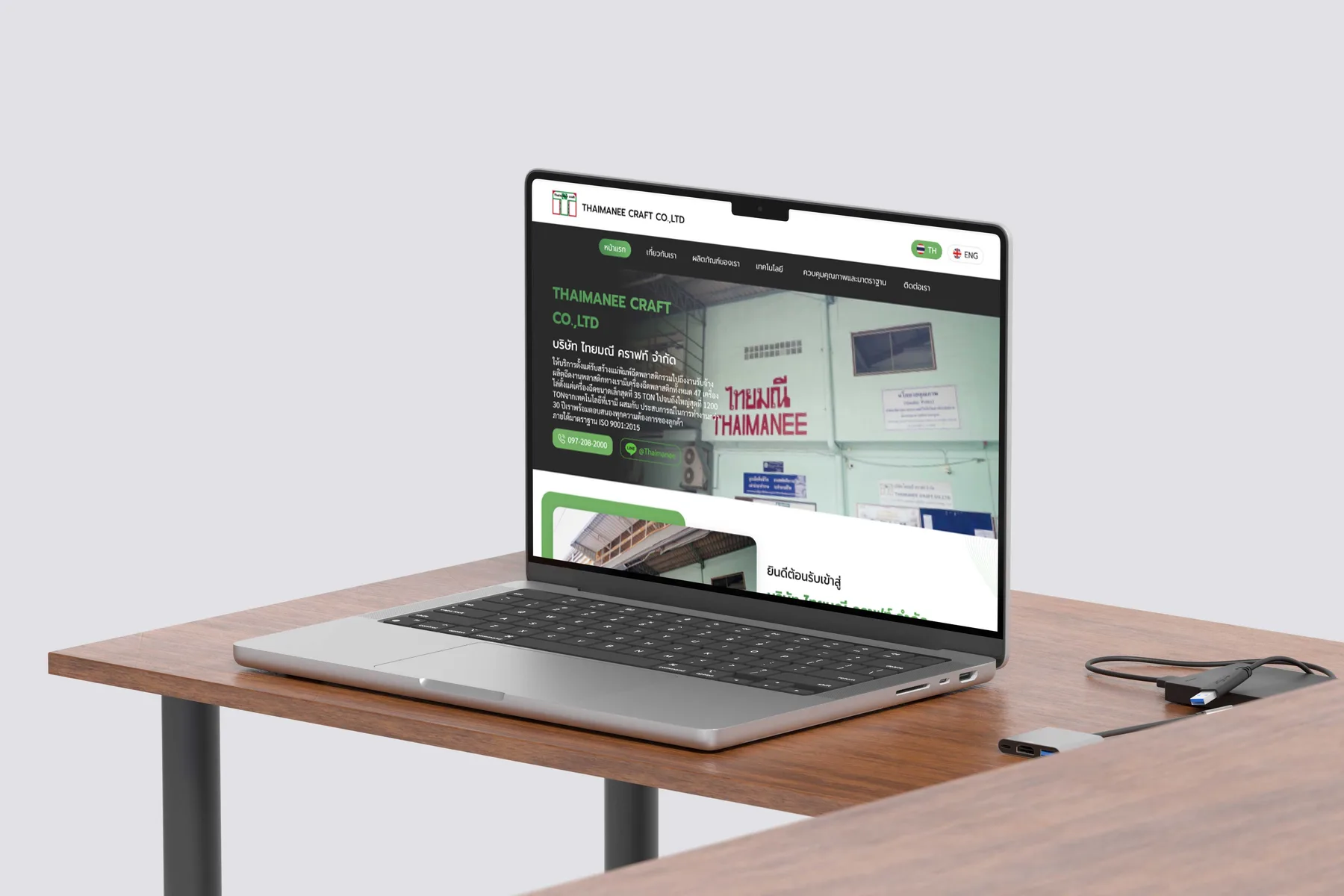
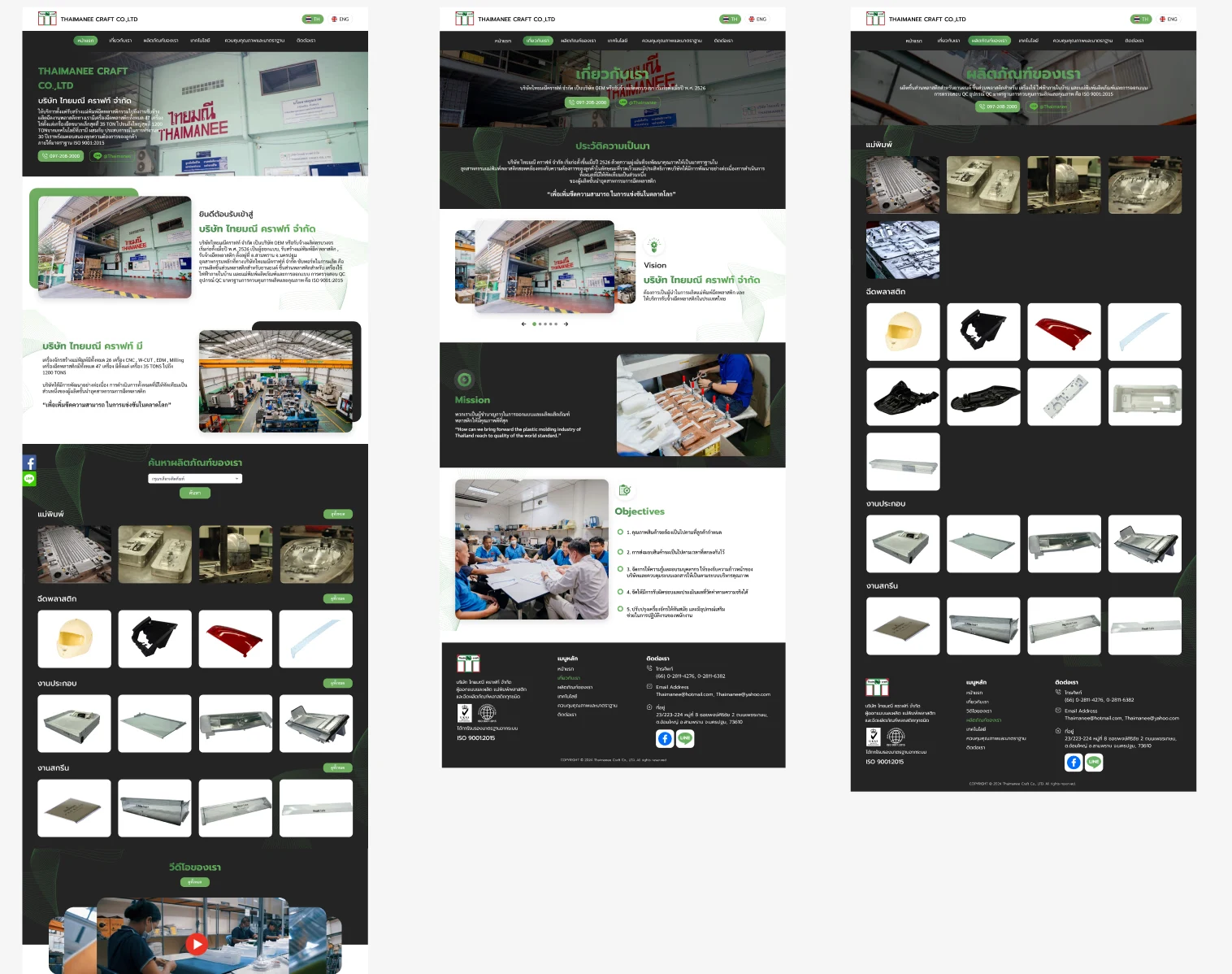
Thaimanee Craft website — published machine inventory, clamping tonnage range and four production categories
Executive Summary & Impact
Real-world
Match between system and the real world
capacity published as the figures a buyer qualifies on
Recognition
Recognition rather than recall
photo grids of real parts to match a component against
Consistency
Consistency and standards
language switch in the same place on every page

A corporate site for an injection moulding and mould-making factory, designed for an industrial buyer qualifying suppliers before they make contact. The design publishes the pass-or-fail criteria up front, lets a buyer match their part against real production, and keeps the language switch in the same place on every page.

01 / Discovery & Heuristic Gaps

Problem & Usability Gaps

An OEM buyer qualifies a moulding supplier on two things before anything else: what machines it runs and whether their tonnage covers the part. Read against the heuristics, a supplier site that publishes neither leaves the buyer nothing to check against their own requirement; without photographs of parts actually produced there is nothing to compare a component to; and a second language that has to be hunted for leaves an overseas buyer with less evidence than a domestic one.

Capacity unstated
machine inventory and tonnage range usually left unpublished
Nothing to match
no record of parts produced to compare a component with
Language hunted
a second language an overseas buyer has to look for
02 / Architecture & UX System

Design Decisions by Heuristic

01
Match between system and the real world
Capacity Stated in the Buyer's Terms
The homepage states the machine inventory in plain figures, 26 mould-making machines across CNC, wire-cut, EDM and milling and 47 injection machines from 35 to 1,200 tons, in the units a buyer specifies with. A buyer confirms their part fits before writing an email, which is all a first visit needs to achieve.
02
Recognition rather than recall
Real Parts, Grouped by Process
Moulds, injection, assembly and screen printing each carry a photo grid of parts the factory has actually produced. A buyer recognises a component like theirs by eye instead of describing it and waiting for an answer.
03
Flexibility and efficiency of use
Search and Filter Before the Grids
A product search with a category filter sits above the category grids on the homepage, so a buyer who knows what they are looking for can go straight to it rather than browse.
04
Consistency and standards
One Language Switch, Every Page
The Thai and English switch sits in the same place in the top bar of every page, and each page header repeats the phone and LINE contacts. A buyer can change language or make contact from wherever they land, without looking for a separate section.
03 / Verification & Evidence

Before & After by Heuristic

HeuristicBeforeAfterChange
Real-worldCapacity unstatedInventory and tonnage range on the homepagePublished
RecognitionNothing to compare againstPhoto grids of real parts in four groupsCatalogued
EfficiencyBrowse every gridSearch and category filter firstDirect
ConsistencyA second language to look forThai and English switch on every pageFixed place

"A moulding buyer's first question is whether the press can close on their part. Answering it on the homepage, in their units, removes the only reason they had to call before shortlisting."

— Design rationale · Thaimanee Craft Website
04 / Retrospective

Design Learnings

→

Figures a supplier treats as internal are the buyer's shortlisting criteria; publishing them in the buyer's units is the real-world match that matters most here.

→

Photography of real output works as recognition: the buyer matches their component against it rather than reading about capability.

→

Bilingual is a consistency question as much as a translation task: the switch has to sit in the same place on every page, wherever a buyer lands.